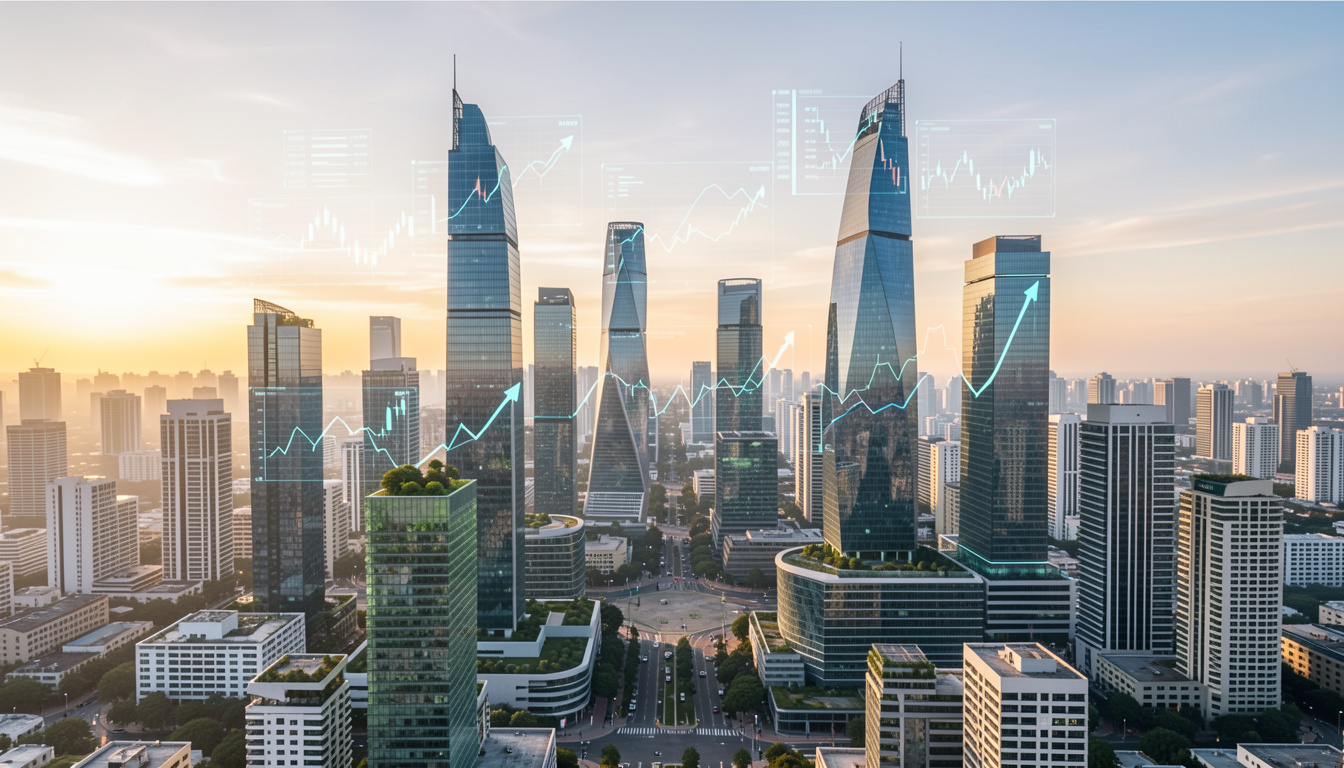
One of the most significant trends in modern real estate is the growing emphasis on sustainability.
Governments, developers, and investors are increasingly prioritizing energy-efficient buildings and environmentally responsible construction practices. Many countries now require new buildings to meet strict energy-efficiency standards, often referred to as “nearly zero-energy buildings.”
Properties with sustainable certifications such as LEED or BREEAM are becoming more valuable because they reduce energy consumption and operating costs. Efficient buildings can cut energy usage by 30–40%, making them highly attractive to tenants and investors alike.
For investors, green real estate offers several advantages:
Sustainable real estate is no longer just a niche market—it is quickly becoming a standard expectation.
Technology is revolutionizing every aspect of the real estate industry.
From artificial intelligence to blockchain platforms, modern tools are helping investors analyze markets, manage properties, and discover opportunities faster than ever before.
AI-Driven Property Analysis
Artificial intelligence can analyze massive amounts of data to identify profitable investment opportunities. Predictive analytics helps investors evaluate market trends, rental demand, and property valuations more accurately.
Smart Homes
Modern properties increasingly include smart technologies such as:
These features enhance convenience and attract higher-paying tenants.
Virtual Property Tours
Digital tools now allow investors to evaluate properties remotely through 3D tours and virtual inspections, enabling global investment without physical travel.
For investors seeking an edge, technology adoption is quickly becoming a competitive advantage.
Urban development is entering a new phase with the emergence of smart cities.
Smart cities use advanced technologies such as:
These innovations are transforming how cities function and how residents interact with their environments.
As smart infrastructure expands, properties located in these tech-enabled urban environments will likely experience increased demand and long-term value growth.
For investors, early entry into smart city developments could provide significant returns.
One of the fastest-growing real estate investment sectors is digital infrastructure.
Data centers, logistics hubs, and technology campuses are becoming increasingly valuable due to the rapid expansion of cloud computing, artificial intelligence, and global internet usage.
In fact, data centers rank among the top real estate investment opportunities globally, reflecting the growing demand for digital services and data storage.
The power requirements for data centers are also rising rapidly, creating opportunities for integrated energy infrastructure and specialized real estate development.
Investors who diversify into digital infrastructure assets may benefit from strong long-term demand and relatively stable income streams.
The global shift toward remote and hybrid work models has dramatically changed the demand for office space.
Many companies are downsizing traditional office footprints while investing in:
These changes are forcing developers and investors to rethink traditional office buildings.
Commercial properties that adapt to flexible work trends such as coworking spaces and mixed-use developments are more likely to remain competitive in the evolving market.
Investors should consider properties that can be repurposed or adapted to new work patterns.
Modern urban developments increasingly combine residential, commercial, and entertainment spaces within a single community.
These mixed-use developments create “live-work-play” environments where residents can live, work, shop, and socialize within walking distance.
Benefits of mixed-use developments include:
This trend reflects a growing preference for convenience and lifestyle integration.
For investors, mixed-use projects often offer diversified income streams and long-term growth potential.
Urban congestion and rising property prices are driving investors and homebuyers toward suburban and emerging areas.
Improved infrastructure and remote work flexibility are making suburban living more attractive.
As a result, many previously overlooked locations are becoming new real estate hotspots.
These areas often offer:
Investors who identify growth corridors early can benefit from significant capital gains as infrastructure and population growth accelerate.
Real estate is becoming more accessible thanks to fractional ownership models.
Fractional investment allows multiple investors to own shares of a property rather than purchasing it entirely.
This model offers several advantages:
Blockchain technology is further accelerating this trend by enabling tokenized real estate assets, which allow properties to be divided into digital shares traded on specialized platforms.
This innovation could fundamentally transform the real estate investment landscape.
One of the most persistent global challenges is the shortage of affordable housing.
Rapid urbanization and population growth are increasing demand for cost-efficient housing solutions.
As a result, developers and governments are focusing more heavily on mid-income and affordable housing projects.
For investors, this segment can offer:
Affordable housing may not always generate luxury-level returns, but it can provide reliable cash flow and lower vacancy risk.
Energy is becoming a critical factor in real estate investment decisions.
Modern buildings are increasingly designed to produce and manage their own energy through:
Buildings that integrate energy solutions can reduce operating costs and even generate additional revenue by participating in local energy markets.
As energy costs rise globally, energy-efficient properties are likely to become more competitive and valuable.
Large institutional investors such as pension funds, sovereign wealth funds, and private equity firms are increasingly allocating capital to real estate.
Major industry deals and acquisitions highlight the growing importance of global real estate investment networks. For example, global property advisory firms are expanding through major acquisitions to strengthen capital market capabilities and investment opportunities.
This institutional involvement can drive market growth but may also increase competition for high-quality assets.
Individual investors should focus on niche opportunities and emerging markets where competition is lower.
The COVID-19 pandemic permanently changed how people view their living environments.
Today’s homebuyers increasingly prioritize:
Properties that promote healthy living such as buildings with fitness centers, green spaces, and wellness features are gaining popularity.
Investors who focus on lifestyle-oriented developments may benefit from strong demand in the coming years.
With so many changes shaping the market, investors must adopt forward-thinking strategies.
Short-term market fluctuations are inevitable, but long-term trends such as sustainability, technology, and urbanization will continue shaping real estate demand.
Diversifying across multiple property types residential, commercial, digital infrastructure, and mixed-use developments can reduce risk and increase stability.
Using data analytics, AI tools, and digital investment platforms can help investors identify opportunities faster and make more informed decisions.
Real estate investment can be complex. Working with experienced advisors and investment professionals can help investors navigate market risks and identify high-quality opportunities.
The future of real estate investment will be shaped by technology, sustainability, and evolving lifestyle trends. From smart cities and digital infrastructure to green buildings and fractional ownership, the industry is entering a new era of innovation.
For investors who understand these trends and adapt their strategies accordingly, the opportunities are substantial.
Real estate has always been a powerful wealth-building tool but the investors who succeed in the coming decades will be those who embrace change, leverage new technologies, and identify emerging markets early.
Bellevista provides tailored investment solutions designed to create sustainable, long-term value.