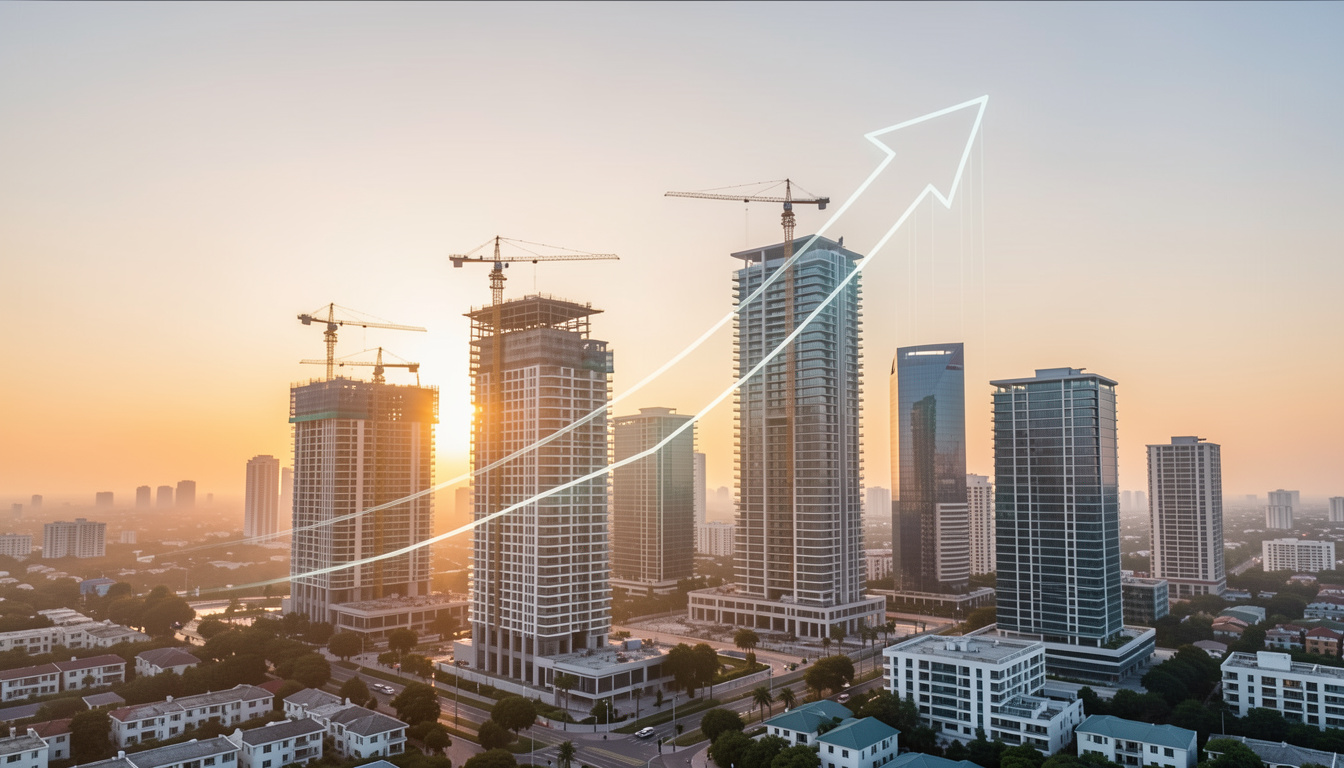
Real estate has long been recognized as a reliable asset class for wealth creation. While purchasing existing properties can generate income and appreciation, real estate development offers investors the opportunity to create value from the ground up.
Real estate development involves acquiring land or existing properties, improving them through construction or redevelopment, and ultimately increasing their value. When done strategically, development projects can generate higher returns than many traditional investment options.
For investors looking to build sustainable wealth, real estate development provides several advantages including capital appreciation, income potential, tax benefits, and portfolio diversification.
In this article, we explore how real estate development creates long-term wealth, the strategies investors use, and the key factors that determine a successful development project.
Real estate development is the process of transforming land or existing structures into new or improved properties.
This process typically involves several stages:
Developers often work with architects, contractors, financial partners, and local authorities to bring a project to completion.
The goal of development is to increase the property's value through strategic improvements that meet market demand.
Examples of real estate development include:
Because development adds new value to the market, it often creates higher profit potential than simply purchasing existing properties.
Real estate development attracts investors for several reasons.
Development projects often generate higher returns compared to traditional real estate investments. When investors acquire land or properties at lower prices and improve them strategically, the increase in value can be substantial.
For example, a developer might purchase land in an emerging area and build residential properties that appreciate significantly once infrastructure and demand grow.
Unlike many other investments, development allows investors to actively create value rather than relying solely on market appreciation.
Through design, construction, and market positioning, developers can transform underperforming assets into highly valuable properties.
Population growth, urban expansion, and evolving lifestyle preferences continuously drive demand for new housing and commercial spaces.
Developers who identify these trends early can benefit from significant long-term returns.
Real estate development generates wealth through multiple financial mechanisms.
One of the most significant drivers of wealth in real estate is appreciation.
As new developments improve neighborhoods and infrastructure grows, property values tend to increase. Investors who hold development projects long-term often benefit from substantial capital appreciation.
For example:
Many development projects generate consistent rental income once construction is completed.
Examples include:
Rental income provides steady cash flow while the property continues to appreciate in value.
When investors finance development projects with loans, the property value may increase faster than the remaining debt.
This creates equity growth, allowing investors to refinance, reinvest, or expand their portfolios.
Developers sometimes sell properties after completing construction and stabilization.
If the development significantly increases the property's value, investors can realize strong profits through strategic sales.
Investors can participate in several types of development projects.
Residential developments include:
This sector often benefits from consistent demand due to population growth and housing needs.
Commercial developments include:
These projects often generate strong long-term lease income.
Mixed-use projects combine residential, commercial, and retail spaces within a single development.
These developments are increasingly popular because they create vibrant communities where people can live, work, and socialize.
Custom homes allow investors to create unique, high-value properties tailored to modern buyer preferences.
Luxury custom homes often attract premium buyers and deliver strong returns in high-demand locations.
Not every development project succeeds. Successful developers carefully evaluate several critical factors before starting a project.
Location remains one of the most important factors in real estate investment.
Developers analyze:
Properties in growing areas tend to appreciate faster and attract more buyers or tenants.
Understanding what buyers or tenants want is essential.
Developers conduct market research to identify:
This ensures the final development meets real demand.
Well-designed properties attract higher prices and long-term tenants.
Effective design considers:
Thoughtful planning increases property desirability and long-term value.
Development projects require careful financial management.
Developers must account for:
Accurate budgeting helps prevent unexpected financial risks.
Real estate development is rarely a solo effort.
Successful projects often involve a team of experienced professionals including:
These experts help ensure the project remains on schedule, within budget, and aligned with market demand.
Working with experienced professionals significantly increases the likelihood of a successful project.
For many investors, real estate development is not just about short-term profits—it is about building long-term wealth.
Development projects can become valuable long-term assets that generate income for decades.
For example:
By reinvesting profits from successful projects, investors can expand their portfolios and build significant wealth over time.
While real estate development offers significant opportunities, investors should also understand the potential risks.
Common risks include:
However, careful planning, strong market research, and experienced management can significantly reduce these risks.
Investors who approach development strategically are often able to manage these challenges effectively.
Global demand for housing, infrastructure, and commercial space continues to grow.
Several trends are increasing development opportunities:
These trends create strong long-term opportunities for investors who participate in well-planned development projects.
Real estate development remains one of the most effective ways investors create long-term wealth. By transforming land or underutilized properties into valuable assets, developers can generate income, appreciation, and portfolio growth.
Successful development projects combine strategic location analysis, thoughtful design, strong financial planning, and experienced teams.
For investors who understand the market and work with the right partners, real estate development can provide powerful opportunities to build sustainable wealth and long-term financial success.
Bellevista provides tailored investment solutions designed to create sustainable, long-term value.